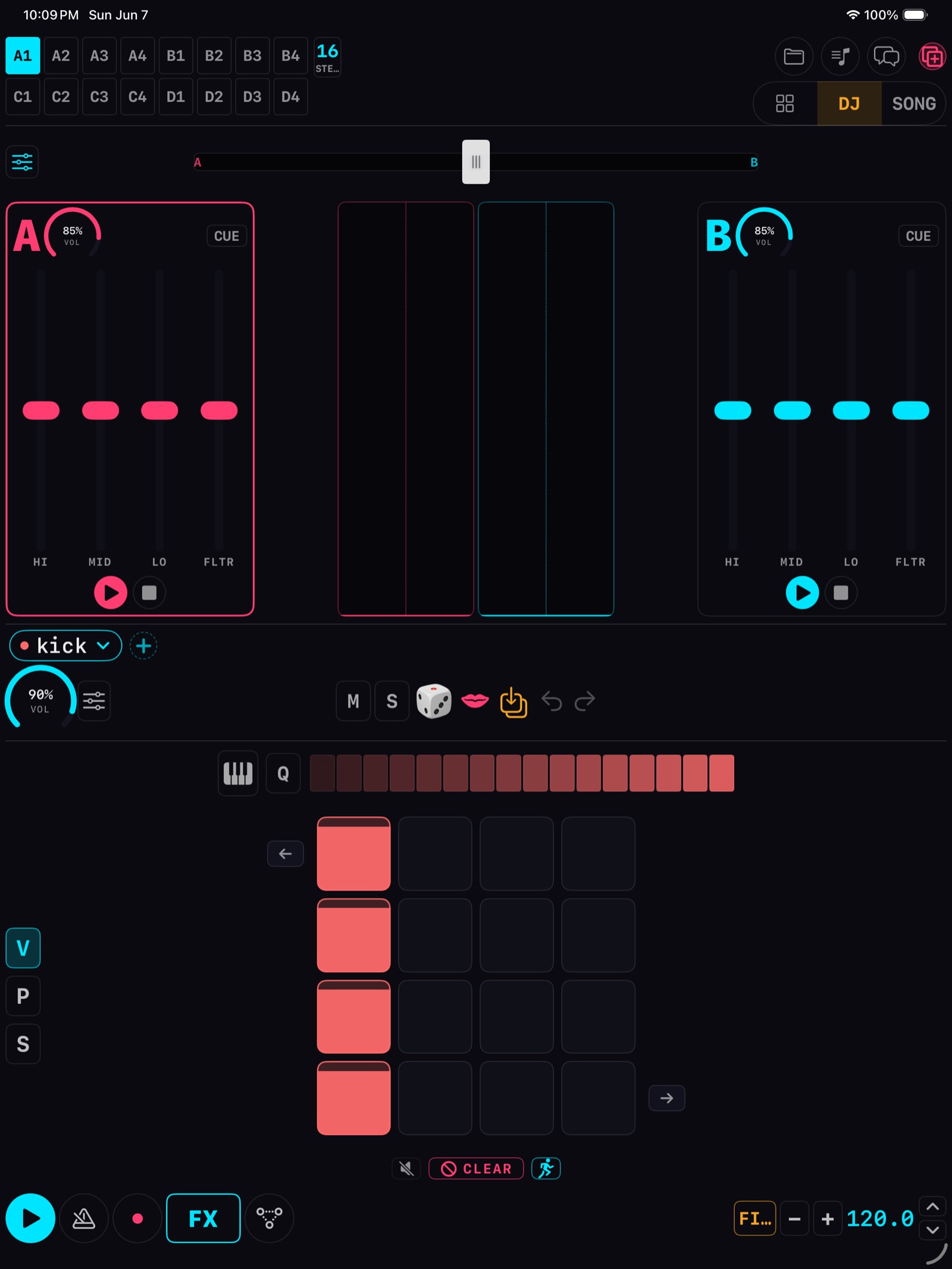
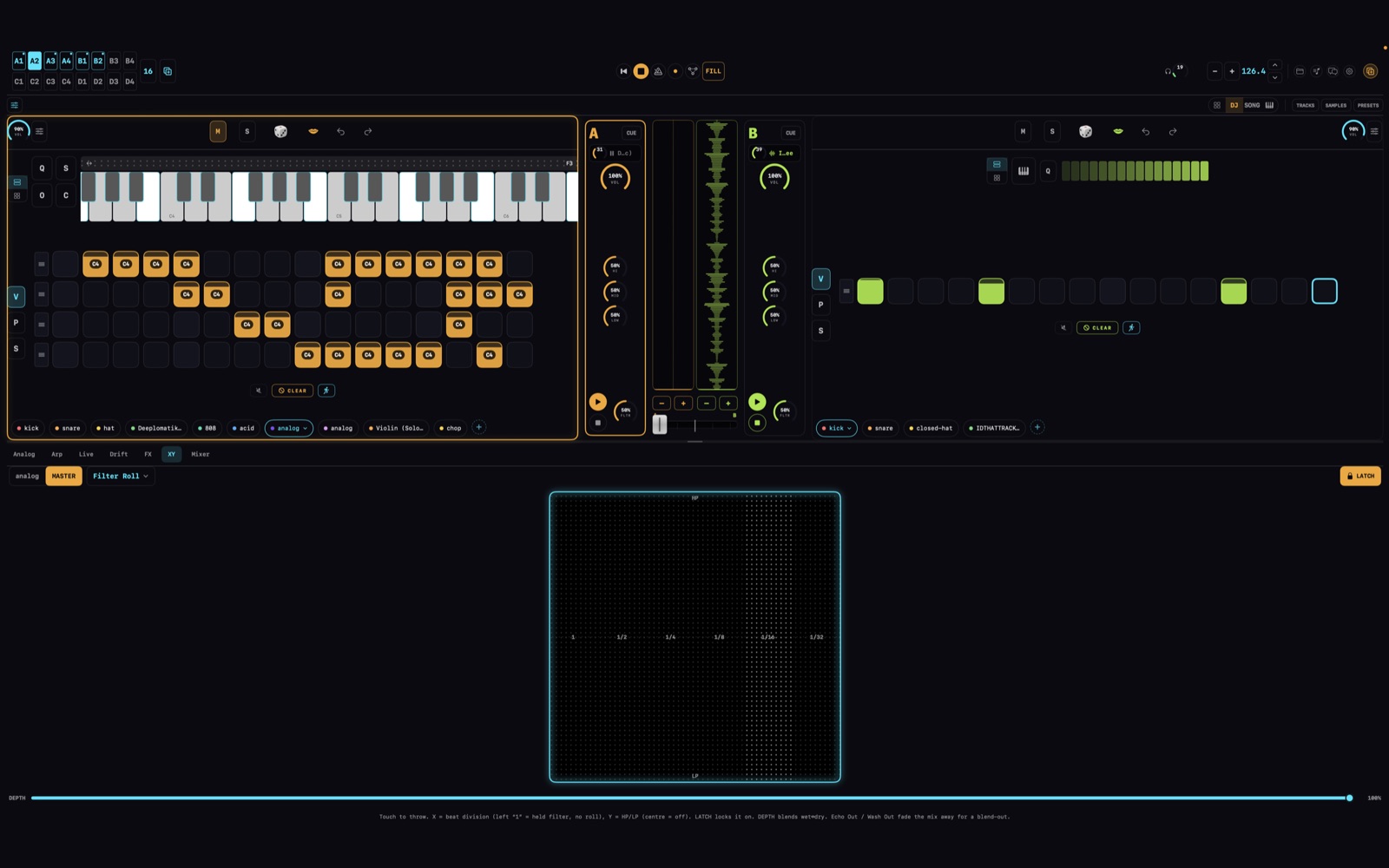
Load your own tracks — Files, iCloud, Dropbox, Beatport purchases, SoundCloud — and Sonyk finds the tempo, builds the grid, and drops the next deck on the 1. Then split any record into drums, bass, vocals and everything else, on the device, in seconds.

Tempo detection within a BPM, a persisted beat grid you can true by ear, and quantized starts — a deck always starts on the other deck’s 1.
Three-band kill EQ, a sweep filter, headphone cue with a cue mix, and a beat-synced crossfader.
Real-time keylock (Signalsmith), bar loops, a loop bank, beat-repeat with a phantom playhead.
DRUMS · BASS · VOCALS · OTHER pads per deck and per track. All four up is the untouched record, bit for bit.
A live effects unit: beat-synced filter, echo, gate, beat-repeat and riser on an X-Y pad, with live BPM detection.
Grab the last bars retrospectively, perfectly in time; banks, overdub layers, resampling.
A per-deck queue with LOAD NEXT; tracks you’ve imported live in one library with BPM and length.
Both decks’ songs, every fader, EQ, stem pad and load, and the mix as audio — one .sonykset file that replays the performance.
The sequencer and the decks share one clock. Deck A can be a pattern you made; deck B a record. Ableton Link brings the rest of the room in.

No app can pull audio from Spotify or Apple Music. Sonyk loads the tracks you own — Files, iCloud, Dropbox, Beatport purchases and SoundCloud downloads — and treats them as audio tracks with a real beat grid.
No. Separation runs on the device (Core ML); nothing is uploaded. The model downloads once (about 80 MB).
MIDI Learn maps any control; an APC mini template ships with live pad, mute and solo LEDs.
See Sonyk vs djay — djay is the better pure-DJ tool in several ways; Sonyk is the one where the decks and a groovebox share a clock.